Why Teens Turn to Screens and Sexual Content to Cope and What Parents Can Do
If you’re a parent worried that your teen’s digital habits or sexual behaviors are taking over their life, you’re not alone. Many families are watching young men spend more time online, gaming, messaging, or viewing sexual content than engaging with school, relationships, or healthy activities. For some teens, these behaviors are not just casual habits. They become a way to cope with hard emotions, avoid discomfort, and feel temporary relief from pressure or pain.
In that sense, these compulsive behaviors are not just about pleasure or curiosity. They often become survival strategies for teens who are trying to manage stress, anxiety, loneliness, shame, or fear in ways they do not yet know how to express or regulate directly.

From Normal Exploration to Compulsive Behaviors
Normal curiosity about sex, gaming, social media, or screens is part of teenage development. But there comes a point where these behaviors shift from healthy exploration to compulsion — meaning the teen feels like they have to do them even when they want to stop or when these behaviors are causing problems.
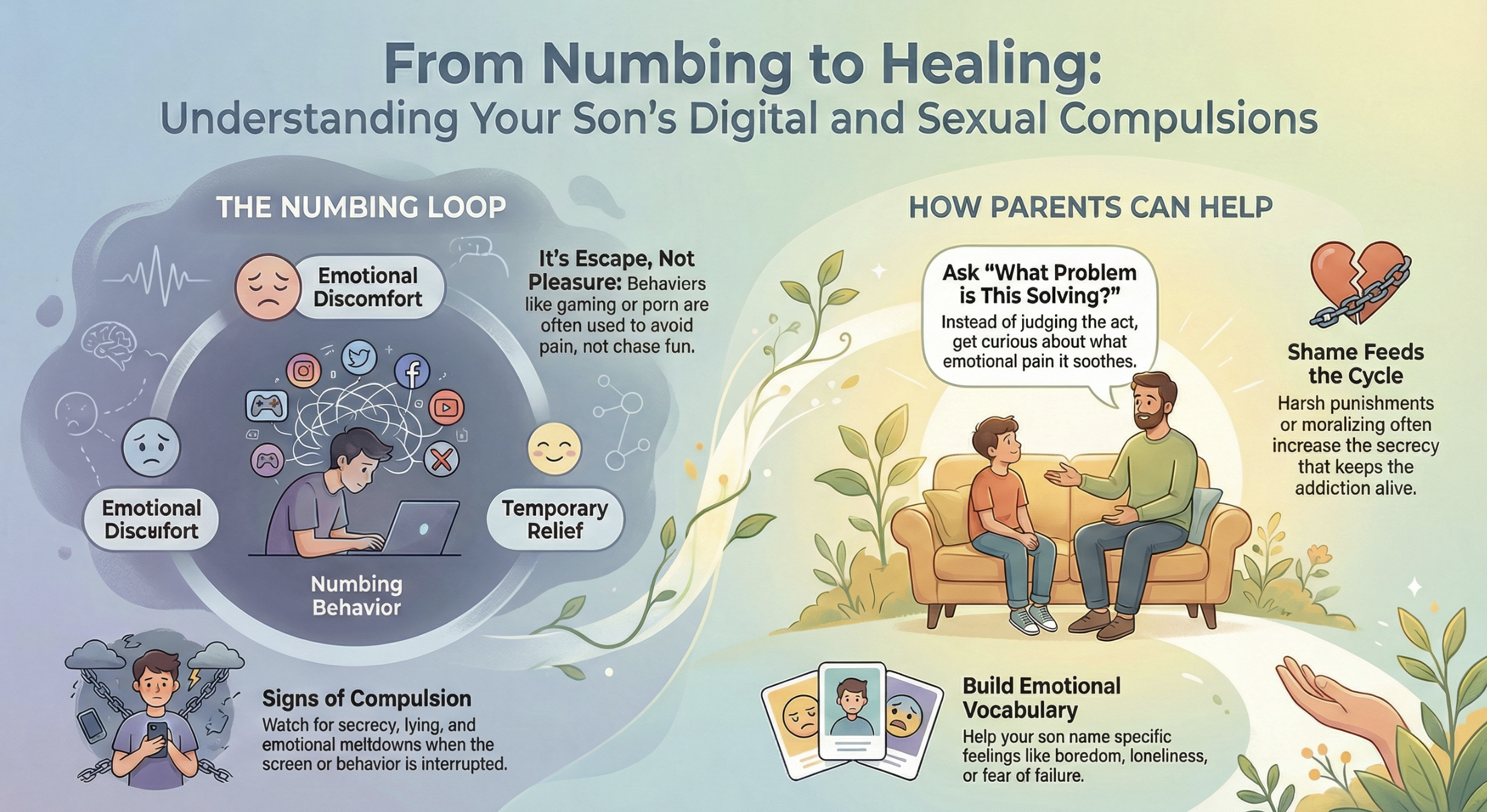
In many cases, teens aren’t purposely chasing pleasure. They are trying to avoid distress. Whether it’s pornography, sexting, anonymous chats, or hours of gaming, the behavior becomes a quick way to push uncomfortable feelings out of awareness and get immediate, short-term relief. Over time, the cycle can look like this:
Something triggers emotional discomfort
The teen turns to screens or sexual content for relief
They feel temporary calm or distraction
The underlying feelings remain or intensify
They repeat the behavior more urgently when stress returns
This pattern becomes familiar and automatic, and it can feel nearly impossible to stop without support.
Red Flags That Compulsive Behavior May Be a Problem
Some warning signs that behaviors may be more than regular teen habits include:
Trouble stopping the behavior even when there are negative consequences
Hiding activity or lying about what they are doing
Losing interest in friends, hobbies, or life outside of screens
Emotional distress or irritability when the behavior is interrupted
These patterns are not simply about willpower. They often reflect deeper emotional needs and ways of coping that are not yet fully developed in the teen’s nervous system.
Why Shame and Secrecy Make It Worse
Young men struggling with compulsive sexual or digital behaviors often feel intense shame, especially if they have been caught, punished, or confronted harshly. But shame does not reduce the behavior — it increases it.
When a teen feels judged or misunderstood, they become more secretive, more disconnected from support, and more likely to rely on the very behaviors that are creating problems. This creates a cycle of shame, secrecy, and further disconnection, making change feel even harder.
What Parents Can Do Differently
It’s understandable to want to stop the behavior immediately when you see it affecting your teen’s life. But simply taking away phones, devices, or access without addressing the emotional needs underneath often leads to pushback, hiding, or escalation.
Here are some ways to respond that help teens build emotional strength without shaming them:
Stay Curious, Not Reactive
Ask questions like “What does this help you feel or avoid?” rather than accusing or labeling the behavior as wrong. This invites connection and understanding instead of defensiveness.
Offer Support for the Feelings Behind the Behavior
Meet them where they are emotionally, and help them name what they are feeling — anxiety, boredom, loneliness, or something else. This builds emotional awareness and gives them tools for managing feelings without needing to escape.
Avoid Moralizing Language
Framing sexual behavior or digital use as “bad” or “dirty” only reinforces shame. It is more helpful to talk about what feels healthy, meaningful, and aligned with your teen’s values and future goals.
Build Skills Together
Work with your teen to set boundaries and limits that feel realistic and fair. Let them have a say in creating rules so they feel ownership rather than punishment.
Look Beneath the Behavior
Compulsive patterns often serve a purpose: to manage overwhelming feelings, to numb emotional pain, or to escape from challenging realities. When you address the root emotional issues — not just the behavior — you create space for real change and healing.
Helping Teens Find Balance and Emotional Support
Compulsive sexual or digital behaviors do not have to define your teen’s life. With the right support, teens can learn to regulate emotions without relying solely on escape behaviors. This often involves building emotional vocabulary, learning healthier ways to manage stress, and strengthening connections with supportive adults.
When teens feel understood instead of judged, they are more likely to open up, explore their emotions, and develop balanced coping skills. This kind of growth does not happen overnight, but it can lead to deeper connection, greater self awareness, and healthier patterns of behavior over time.